Internationales
Frequently Asked Questions
Career opportunies in Germany with a MA degree Psychology
Our MA Psychology program explores one of the most differentiated and contemporary perspectives of the human psyche, and one of the most modern of the human sciences.
Its curriculum is based on the recommendations of the German Psychological Society (DGPs) and the focus of the programme is on learning to apply fundamental diagnostic, counselling and therapeutic competencies as well as research methods, social psychology and psychoanalysis as a cultural theory. The study course has been approved and officially accredited by the Berlin Senate.
Would you like to work in Germany with a Master's in Psychology? You can find all the information about your options in our FAQ.
If you have further questions on job opportunies with a Master's degree in Psychology in Germany, don't hesitate to contact us:
Caroline Sosat, M.Sc., International Career Service: career.service(at)ipu-berlin.de
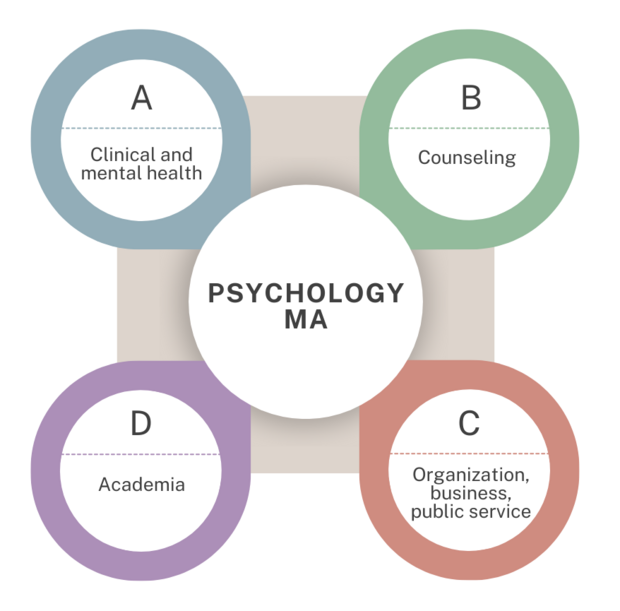
What are my career options in Germany with the Master's degree in Psychology from IPU?
Overall, with a Master's degree in Clinical Psychology from IPU Berlin, you will become a Clinical Psychologist, with relevant knowledge on the topics of prevention, diagnosis and treatment of mental disorders, counseling and research methods, following the on the recommendations of the German Psychological Society (DGPs).
The degree gives you access to professional fields that we roughly divide into four areas:
A Clinical Psychology
B Psychosocial Counseling
C Organizations, businesses and public service
D Academia and research
FAQ MA Psychology
First of all: you do not need the approbation license to work in health care in Germany.
With a Master’s degree in Psychology, there are several ways to provide mental health care for patients. Job fields without approbation license are:
- Employment in a psychiatric, psychosomatic or rehabilitation clinic or a psychiatric outpatient clinic.
- With a license as a Heilpraktiker für Psychotherapie, working in a private practice or online with private paying patients.
- There are also in-between places in need of clinical knowledge (e.g. refugee shelters)
In Germany, public health insurances pay for psychotherapy if it is clinically indicated. However, the matter is more complicated than it sounds. Psychotherapists in private practices need a special training and an approbation license to be paid by public health insurance. The license allows to bill the public health insurance for therapeutic services one's own private practice.
With traning and license, a clinical Psychologist becomes a „psychologischer Psychotherapeut“ (PP), a protected term.
In 2020, an extensive legal reform came info effect, concerning the training and recognition of PPs. The consequence is that a master's degree in psychology, which was before accredited for becoming a PP, now is no longer sufficient for the PP-training and the approbation license. This does not concern privately paid psychotherapy, counselling and employment in clinics.
Due to the recent legal reform we do not recommend to pursue the training as a PP with a MA in Psychology from IPU Berlin.
There is, however, a transitional period until 2032. For some people who started studying at a university before September 1st, 2020, it may be worthwhile to check if they are still elegible. But the legal situation is volatile, at the moment. If you are not sure, don't hesitate to contact us: career.service(at)ipu-berlin.de
The old system’s professional title „Psychologischer Psychotherapeut“ has the highest degree of quality control and protection. They require a highly regulated training which experience shows takes 4 to 10 years. At the end of the training there is an official examination. The last examinations are planned for 2032 (in exceptional cases 2035). However, due to legal regulations we do not recommend pursuing this way.
There is a transition phase from the old to the new system. Two dates are relevant here:
- Start of the study course in Psychology (or equivalent) before September 1, 2020
- Last approbation examinations in 2032 (in exceptional cases 2035)
The legal reform has changed the entire study system for psychotherapists. Nowadays, you have to choose „Psychotherapie“ as a major for your Bachelor's degree. Many conditions have not yet been clarified, such as who is to pay the wages of graduates in the clinics. Extensive new regulations are still to be expected here.
Unfortunately, as far as we know, the Psychotherapie-study course is not offered in English at any German university.
Our Master’s degree in Psychology is accredited for the old system of Psychotherapy in Germany.
However, for access to the old system, you must meet the following requirements:
- Master's degree in psychology (or equivalent, e.g. MA in Psychology from IPU Berlin)
- Enrollment in a fundamental degree program in clinical psychology before September 1, 2020 (Bachelor's degree; equivalent foreign degrees may be also accepted; in some cases any university degree may be accepted)
ECTS credits in clinical psychology earned outside the study program and after September 1, 2020 will not be recognized. However, this should be checked on a case-by-case basis.
Many students do not meet these requirements. We then recommend the many other career opportunities that are possible with the Psychology Master's degree from IPU Berlin.
Anyone who has:
- started a fundamental degree course in clinical psychology or equivalent (recognized in Germany) before September 1, 2020
- successfully completed a Master's degree in Psychology (e.g. the Master's in Psychology at IPU Berlin) or equivalent (recognized in Germany)
still has chance of being able to complete their licensing training under the old system. Please note that the licensing training itself will be very demanding and financially costly. Please also note that a lot of psychologists are currently trying to get into the old system, so there is a lot of competition. In addition, the last final examinations are due to take place in 2032 (2035). Overall, the situation is volatile and you should seek individual advice.
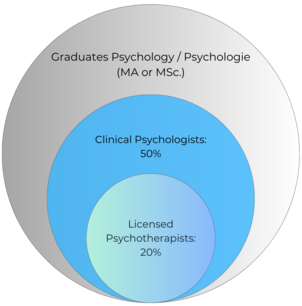
Yes, you can! The master's in psychology at the IPU Berlin is designed according to the old system and is therefore highly recognized in clinics and by employers. Many clinical psychologists work in the field of mental health without an Approbation license.
What we do highly recommend, however, is to do further training after graduation to acquire psychotherapeutic and counselling skills. A Master's degree in psychology is best combined with further psychotherapeutic training!
This information is still a work in progress.
Heilpraktiker für Psychotherapie treat mental, psychosomatic and emotional illnesses. Their work is subject to almost no quality control. They cannot bill their services to the public health insurance companies. However, some private health insurance companies will cover the costs, otherwise the patient must pay for the treatment themselves.
We found this website helpful:
https://www.berlin.de/ba-tempelhof-schoeneberg/politik-und-verwaltung/aemter/gesundheitsamt/heilpraktikerbereich/zulassungsvoraussetzungen-und-unterlagen-zur-antragstellung-379579.php
Concerning the field of Clinical Psychology: If we look at the Berlin job market, we do not recommend working in Berlin, at the moment. A lot of psychologists are currently trying to get into the old system and the system requires a significant time of low wage clinical work, so expect a lot of competion.
However if you would like to offer counselling in english or in your native language, it’s useful to work in cities and place where many people live who speak respective language. For English, think about big cities Hamburg and Frankfurt.
We recommend that you expand your job search radius. There are always offers from clinics in smaller town on the relevant job boards. Often you don't even have to speak perfect German, sometimes B2 or even B1 level is sufficient.
Two job boards that are specifically for psychologists that we recommend are
In addition, the IPU Berlin offers the IPU Connect portal as a way to get in touch with employers.
This information is still a work in progress.
Psychosocial counseling helps with problems and personal crises and can be a first point of contact for people who do not (yet) want to see a psychologist.
We found this website helpful (even if a little outdated): medium.com/life-is-complicated/a-practitioners-guide-to-understanding-what-psychotherapy-and-counselling-means-to-your-work-in-f7c6c73677cb
This information is still a work in progress.
A Master’s in Psychology enables you to work within the following fields:
- Companies, NGOs and consulting
- Human resources
- Authorities, public service, non-profit organizations
- Educational system
This information is still a work in progress.
In Germany, doctorates can be completed at universities, comprehensive universities and teacher training colleges that are authorized to award doctorates. The prerequisite is a university degree after a standard period of study of at least 8 to 10 semesters.
A Master’s in Psychology enables you to pursue a career in academia, research and academic teaching and allows you to start a doctoral project or enroll in a PhD program.
Unfortunately, we are currently unable to provide you with any information on the recognition of the MA Psychology at IPU Berlin in other countries.
If you have any information, please let us know: career.service(at)ipu-berlin.de
Have you discovered any errors in our FAQ or would you like to add information? Please let us know: career.service(at)ipu-berlin.de